New York State guide
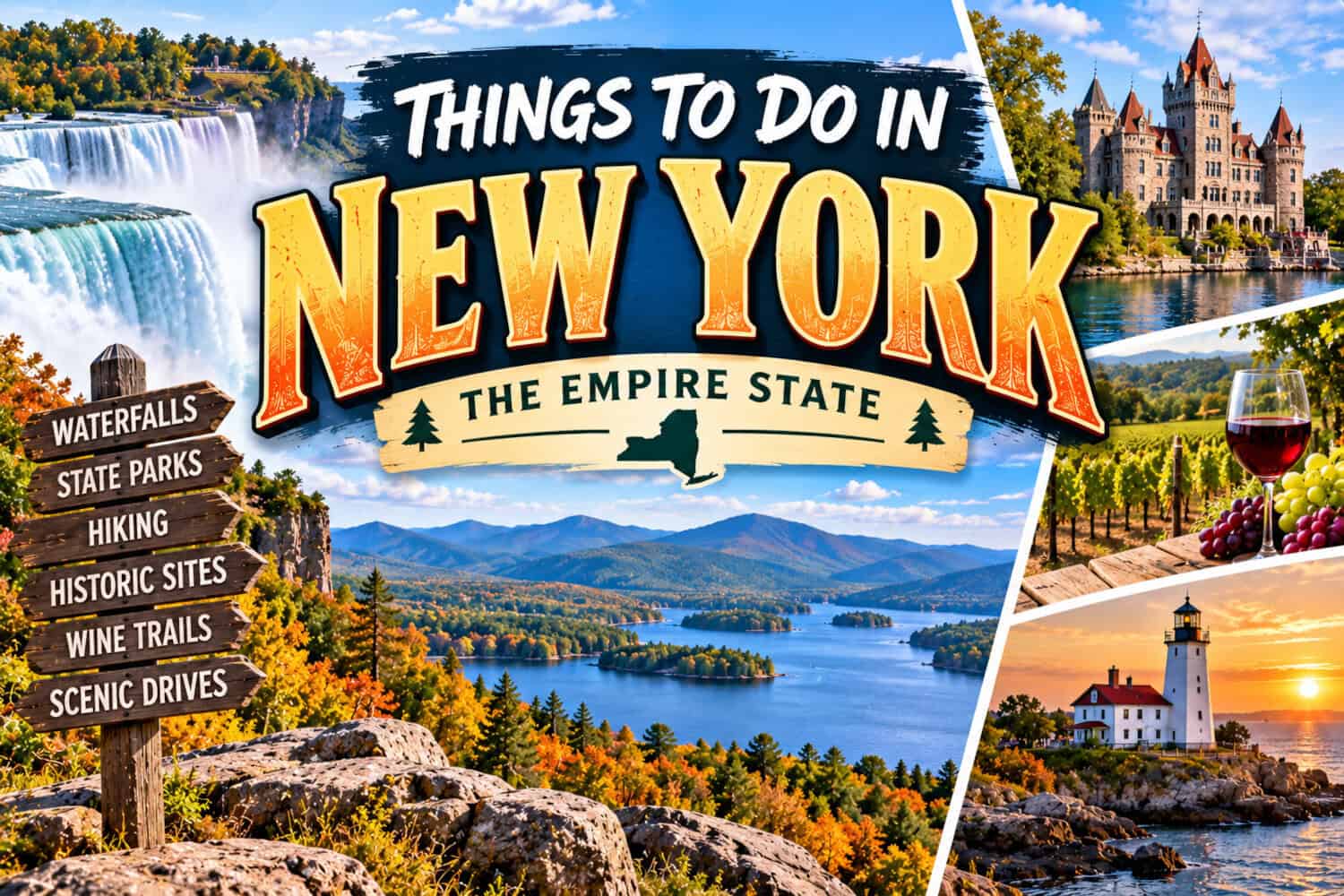
New York City takes up one small corner of the state. Beyond it are Long Island's Atlantic beaches, the river towns of the Hudson Valley, the Catskills, and the Adirondacks.
Farther west are the Finger Lakes. Buffalo and Niagara Falls sit at the far end, about 400 miles from Manhattan.
The regions are far apart and have little in common, so most trips work best with one or two of them.
Where to go
New York City is for museums, architecture, and food, and its neighborhoods are best seen on foot and by subway.
If you want a shorter break from the city, head up the Hudson Valley for historic river towns or out to Long Island for beaches and coastal villages.
The Catskills and, farther north, the Adirondacks are where you go for mountains and hiking.
In the Finger Lakes, waterfalls and small lakeside towns share the shores with wineries. Western New York means Buffalo and Niagara Falls.
When to visit
Summer is the season for beaches and lake swimming. In fall, the leaves turn, first in the Adirondacks and a few weeks later downstate.
Winter brings skiing and deep snow upstate. Spring is green, and the waterfalls run highest after the snowmelt.
Conditions change a lot from one region to the next: mountain trails can stay muddy or icy well into spring, and some gorge trails close for the winter.
Getting around
You don't need a car in New York City.
Metro-North trains run to parts of the Hudson Valley, and the Long Island Rail Road covers much of Long Island, but small towns and most parks are hard to reach without driving or arranging local transportation.
If you only have a few days, stay in one region and use the destination articles below to pick your stops.